Thinking about buying land near Maple City? A beautiful parcel can be exciting, but vacant land often comes with more questions than a finished home. If you want to know whether a property can realistically become your future home site, retreat, or long-term investment, the details matter. This guide walks you through the key issues to check in Maple City before you buy, so you can move forward with more clarity and confidence. Let’s dive in.
Why Maple City Appeals to Land Buyers
Maple City is small, with 209 residents counted in the 2020 Census, but it plays an important role in Kasson Township. The township master plan identifies it as the township’s main commercial center and its only densely settled area.
That small-scale setting is part of the appeal. Maple City also sits between Traverse City and Empire, with Traverse City about 15 miles to the east and Empire about 12 miles to the west. For many buyers, that creates a practical base with access to day-to-day services, outdoor recreation, and Lake Michigan destinations.
The surrounding area also offers a distinctly Northern Michigan landscape. Kasson Township is largely wooded, with sandy and gravelly soils, small lakes and streams, and varied topography. If you want a rural setting with access to trails, beaches, and nearby towns, Maple City can check a lot of boxes.
Start With Zoning First
Before you picture a home, pole barn, guest space, or future split, start with zoning. In Kasson Township, a parcel’s allowed use depends on its zoning district, not just its mailing address.
The township zoning ordinance uses five base districts:
- Gravel
- Agricultural
- Forested
- Village High Density
- Commercial
That matters because Maple City’s core is intended to remain a center of commercial activity, and the township plan says growth may include mixed commercial and residential uses while retaining village character. Outside those core areas, some uses may need special land use review.
In simple terms, two parcels near each other may have very different rules. One lot may work well for a future home, while another may come with added limits, review steps, or use restrictions.
Confirm Legal Access
A parcel is not automatically buildable just because you can physically reach it. Kasson Township’s zoning ordinance says each lot must have access to a public road or a dedicated easement.
That makes legal access one of the first things to verify. You want to know whether the property fronts a public road, relies on a private road, or depends on an easement across another property.
Private road details can become especially important if you are thinking beyond a single home. The ordinance states that a private roadway or driveway serving five or more lots or residential units must comply with the township’s private access road ordinance.
Access Questions to Ask
- Does the parcel have legal access to a public road or dedicated easement?
- Is the road public or private?
- Who maintains the road?
- Is there enough right-of-way width for your planned use?
- Are there recorded easements that affect driveway placement?
- Will the land physically support a driveway where you want it?
The Leelanau County Road Commission handles driveway permits and instructs applicants to confirm whether the road is public or private before applying. The county building-safety checklist also notes that a driveway permit is required for new construction or use of an existing drive.
Look Closely at the Site Itself
Not all vacant land is equally usable. A parcel may look simple on paper but still come with physical constraints that affect cost, timing, and design.
Kasson Township is about 57% wooded, according to the master plan, and topography can vary from property to property. That means you should pay attention to slope, tree cover, drainage, and the general layout of the land.
If the property is near a wetland, stream, lake edge, or dune-related feature, the review process can become more complex. The Leelanau Conservation District notes that some projects may also require EGLE permitting when a site is near a wetland, stream, ordinary high-water mark, or critical dune area.
When Terrain Can Trigger Extra Review
Leelanau County soil erosion and sedimentation control rules require permits for certain earthwork, including:
- Work within 500 feet of a lake or stream
- Work within 100 feet of a regulated wetland
- Driveway construction on slopes of 10% or greater
- Projects disturbing one acre or more
If you are buying land with a long drive, a hillside building site, or water nearby, these rules are worth checking early.
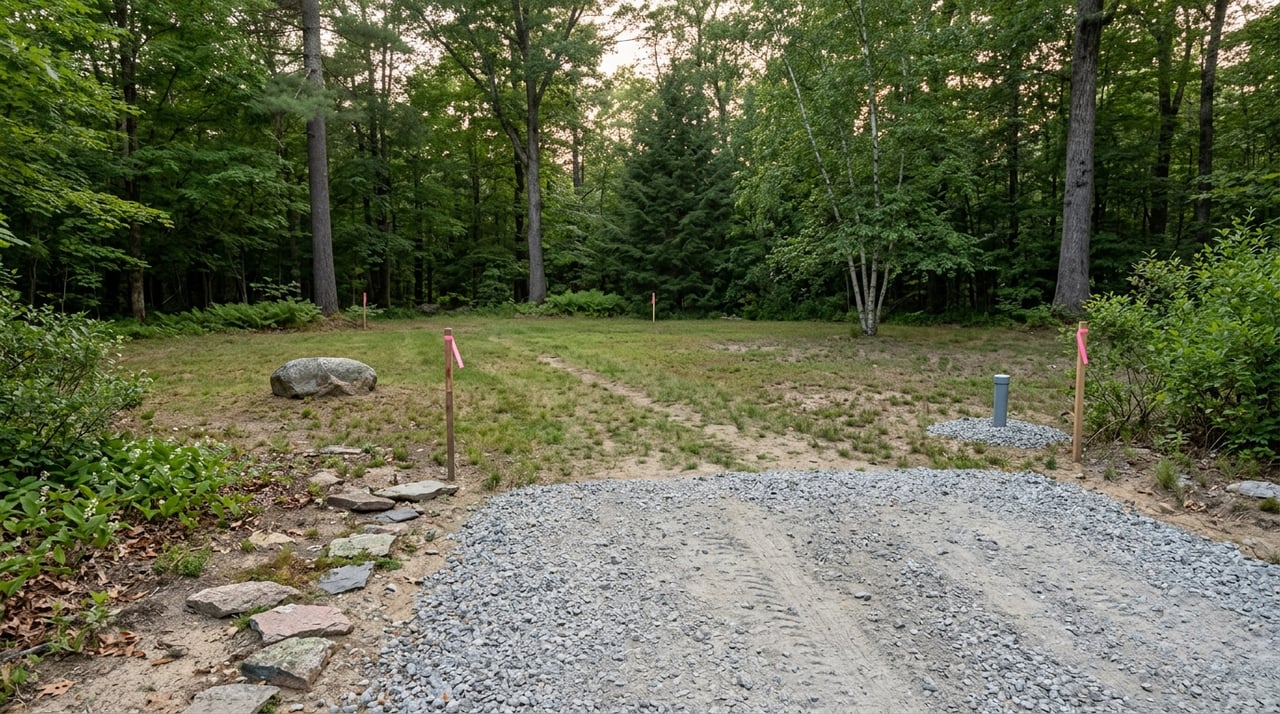
Plan for Well and Septic
One of the biggest differences between vacant land and an in-town home site is infrastructure. Kasson Township has no public water system and no sanitary sewer system. The township master plan says water and sewage disposal are handled privately on individual parcels.
That means your due diligence should include more than just zoning. You also need to understand whether the site can support a private well and septic system in a workable, cost-effective way.
The township plan says most soils in the area are sandy or gravelly and generally accommodate septic systems, though some sites may require deeper wells. Even so, each parcel is different, and local review is essential.
What a Vacant-Land Evaluation Looks At
The local health department’s site survey or vacant-land evaluation reviews factors such as:
- Soil type and permeability
- Depth to the seasonal high-water table
- Slope
- Setbacks from wells and surface water
- Hydrogeology
- Runoff patterns
- Proposed land use
- Easements and rights-of-way
- Buried utilities
- Nearby development
This is a major step because it helps answer the question most land buyers care about: can this property legally and practically support the home you want to build?
Understand Water and Ground Conditions
Water planning matters in Leelanau County. The county’s parks and recreation plan says nearly the entire county depends on groundwater for potable water, and about 60% of the county sits on sensitive aquifers.
For you as a buyer, that reinforces why well placement, septic design, and runoff management deserve careful attention. A parcel may be scenic and private, but if groundwater conditions complicate development, your total project cost can shift.
The health department also says new water wells require a permit, an on-site inspection, and water-quality sampling before final approval. New wells must also be chlorinated and sampled before being placed into service.
Check Existing Well or Septic Systems
Some vacant parcels are not fully raw land. A property may already have a well, septic system, or both.
If that is the case, timing and review requirements can change. The health department says a Time of Transfer evaluation is required before the sale is final when a parcel already has a well or septic system, and the process can take 3 to 4 weeks.
For vacant land without an existing well or septic system, that evaluation is not required. Still, if any older system is present, it is smart to verify its status early so you can plan your purchase timeline.
Verify Utility Availability
Utility access is another piece of the puzzle that buyers sometimes overlook. Electrical service in Kasson Township is listed within Cherryland Electric Cooperative’s Leelanau County service territory, and the Michigan Public Service Commission provides an address-based service area map to confirm the exact utility for a parcel.
That does not mean service is already at the lot line. You will still want to confirm where power is located, whether extension work may be needed, and how that fits into your building budget.
On larger or more rural parcels, utility distance can affect both cost and home placement. It is much easier to plan for that before closing than after.
Pay Attention to Nearby Uses
When you buy land, you are not just buying the lot itself. You are also buying into the surrounding pattern of land use.
Kasson Township includes a mix of agriculture, gravel mining, public facilities, residential areas, and commercial activity. That means it is important to look beyond the survey and understand what surrounds the property today and what the zoning map may allow nearby.
This does not mean a mixed-use area is a bad fit. It simply means your experience on the property may depend as much on neighboring uses as on your own plans for the lot.
Think About Daily Lifestyle
Land decisions are practical, but they are also personal. Maple City attracts buyers who want a quieter inland setting while staying connected to the broader Leelanau lifestyle.
The township’s park inventory includes Myles Kimmerly Park between Maple City and Glen Lake Schools, along with a township park in downtown Maple City. The township plan describes features such as playgrounds, picnic areas, sports fields, a walking trail, and disc golf.
The area is also close to major recreation. Sleeping Bear Dunes National Lakeshore offers beaches, trails, forests, inland lakes, and bluffs, and the Pierce Stocking Scenic Drive is generally open to vehicles from late May through late October. If your goal is to build a home or getaway near outdoor access, Maple City has a strong lifestyle draw.
Build Your Due Diligence Team Early
Land purchases often involve more moving parts than buyers expect. In Maple City, the most relevant local offices can include the township zoning administrator, county building safety, the Benzie-Leelanau District Health Department, the Leelanau County Road Commission, and the Leelanau Conservation District.
The county building-safety packet shows how these pieces connect. Land-use review, driveway permits, health department review, and soil-erosion permits can all become part of a future build file.
A good process starts with questions, not assumptions. If you are serious about a parcel, getting clear answers early can help you avoid surprises later.
A Smart Maple City Land-Buying Checklist
Before you move forward on a parcel, make sure you have solid answers to these basics:
- What is the zoning district?
- Are your intended uses allowed there?
- Does the parcel have legal access?
- Is the road public or private?
- Will you need a driveway permit?
- Are there slope, wetland, stream, or erosion-control concerns?
- Can the site support a well and septic system?
- Does the property already have a well or septic system that triggers a Time of Transfer evaluation?
- Where is electrical service located?
- What surrounding land uses should you factor into your decision?
In many cases, the biggest question is not whether the land looks appealing. It is whether the parcel can legally and affordably become the kind of homesite you have in mind.
Buying land around Maple City can be a great move when the property, your goals, and the local requirements all line up. If you want local guidance as you compare parcels, ask better questions, and move with confidence, Blue Lakes Real Estate Group is here to help.
FAQs
What should you check before buying land in Maple City?
- Start with zoning, legal access, driveway requirements, well and septic feasibility, site conditions, utility availability, and nearby land uses.
Does vacant land in Maple City usually have public water and sewer?
- No. Kasson Township has no public water system and no sanitary sewer system, so water and sewage disposal are typically handled privately on each parcel.
Why does legal access matter for a Maple City land purchase?
- Kasson Township requires each lot to have access to a public road or dedicated easement, so legal access is a basic requirement before assuming a parcel can be used as a homesite.
When might a Maple City parcel need extra erosion or environmental review?
- Extra review may be needed for earthwork within 500 feet of a lake or stream, within 100 feet of a regulated wetland, for driveway work on slopes of 10% or greater, or for projects disturbing one acre or more.
What does a vacant-land evaluation review in Leelanau County?
- The local health department reviews factors such as soil type, permeability, slope, seasonal high-water table, runoff patterns, setbacks, hydrogeology, easements, buried utilities, proposed land use, and nearby development.
Does a parcel with an existing well or septic system need added review before closing?
- Yes. If the parcel already has a well or septic system, the health department requires a Time of Transfer evaluation before the sale is final, and that process can take 3 to 4 weeks.