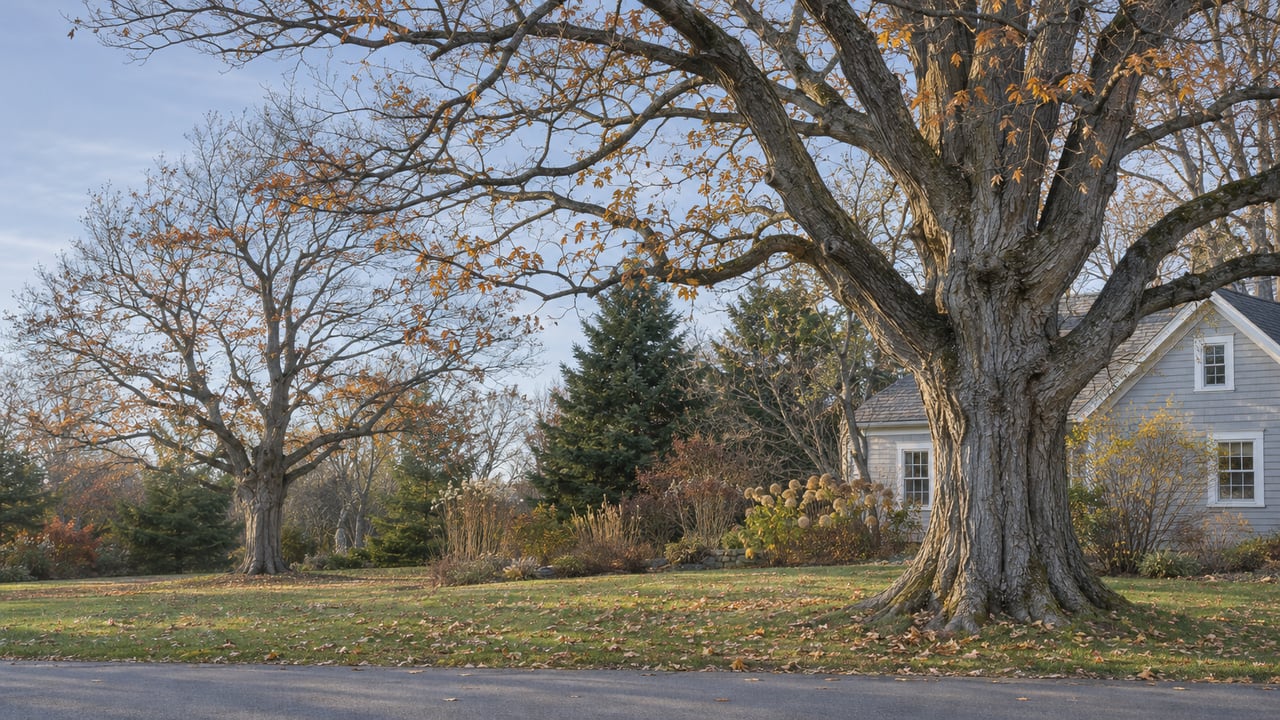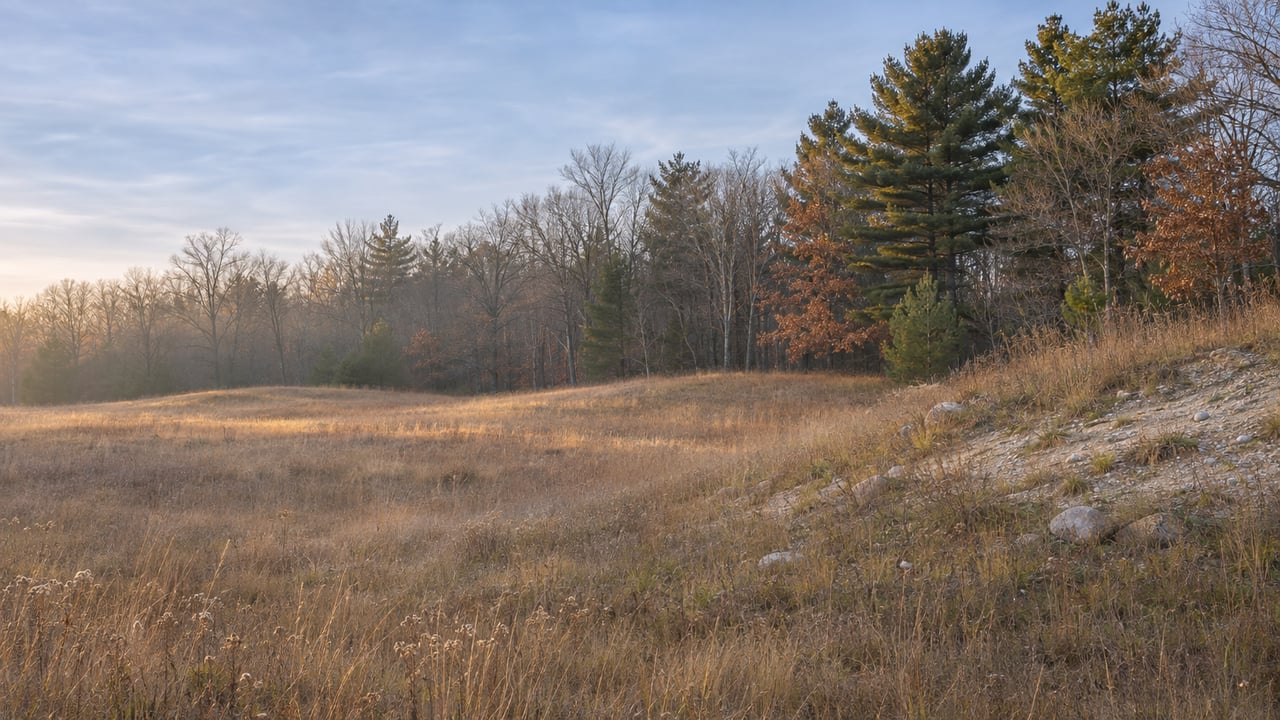
At the bend of M-72 in Kasson Township, the Shimek farm has a red barn, silos and a roadside stand. The stand was once a farmhouse built in the 1860s. Painters and photographers have used the view for decades. Large rock-hauling trucks from two nearby gravel and sand companies also pass the farm all day, as the Glen Arbor Sun reported in December 2022. That year the family put 232 acres of the farm under a Leelanau Conservancy conservation easement. In the Sun's account, Linda Shimek said, "Because we're on so much gravel here, it could be sold and mined. That was the last thing I wanted to happen."
Anyone comparing Maple City with other rural parts of Leelanau County should know that story. Gravel has been mined in Kasson Township since at least 1959, and the township expects decades more of supply. For a particular house, what matters is the stage of the land next to it. It might be a pit that is running out of material. It might be untouched ground that an operator has said it can mine later. Or its owner might have put it beyond mining's reach for good. Ownership records and what operators say in public show which of those applies.
Kasson Township digs for the whole region
Kasson Township's 2023 master plan calls the township "the major supplier of aggregates to the northwest Michigan region." According to the plan, extensive gravel beds lie under much of the township's western half, below rolling, tree-covered countryside. It names Maple City, founded in 1866 as Peg Town, as the township's only densely settled area.
The 2023 Kasson Township Master Plan puts about 1,500 acres of the township as already mined at the time it was written, and records the township's testimony that it holds a 50- to 75-year gravel supply. Kasson's gravel goes into roads, houses and other buildings across the region. That demand is the reason the trucks on M-72 are a lasting part of the area.
The biggest pit is running down
The largest active operation is Rieth-Riley's Kasson Sand & Gravel at 10282 S. Pierce Road. At a Kasson Township Planning Commission hearing on October 19, 2026, the company's general counsel said the operation's nine current parcels have about four or five years of material left at the current rate of use, depending on demand.
He also described the land after that. The company counts thirteen parcels it could mine in total. Among them are two unmined parcels on Bloswick Road, described as between 50 and 150 acres, whether per parcel or together. The gravel goes down about 35 feet before it hits clay. The company strips land only when it is ready to use it, and on the Coleman Road side it reclaims as the pit moves, leaving sloped ground covered with topsoil and vegetation.
Two houses near the same operation can therefore face very different few years. One that backs onto ground worked for years is next to a pit moving toward reclamation. One near an unstripped parcel like those on Bloswick Road is next to where the work may go next, and the operator's own estimates are the best guide to which is which.
Who owns the land decides a lot
The Pierce Road operation shows how land around Maple City changes hands for gravel reasons. Kasson Sand and Gravel started in 1959 under Peninsula Asphalt Company of Traverse City, and the Noonan family ran it from 1982. In 2016, the Glen Arbor Sun reported that Rieth-Riley Construction of Goshen, Indiana, had bought the business in a deal that closed July 1 of that year. With the exception of one privately owned residential property, the sale covered the whole area from Pierce Road on the east to Coleman Road, County Road 669, on the west, and from Kasson Center Road on the south to Bloswick Road on the north.
Several homes came with the parcels. Rieth-Riley's Michigan area manager, Chad Loney, told the Sun the company had no long-term plans for the structures and said, "Probably sometime down the line it will be mined." The county's equalization director described it as a sale of about 17 parcels. The deal is ten years old now, and it shows that around Maple City, a parcel can be worth more for what lies under it than for what stands on it.
The Shimek farm went the other way. The Conservancy's farm protection program placed a permanent easement on it, next to a 305-acre farm whose owners had already protected theirs. In the Sun's account, the family had friends with a stake in expanding the gravel pit who regularly brought up the advantages of selling, and the family chose the easement. On the same gravel, one set of owners sold to a pit operator and another kept a farm. A buyer looking near the pits is really asking which way the land around a house has gone.
What a weekday looks like near the pits
The October hearing put on record the day-to-day details a nearby homeowner would want. The Pierce Road operator said its hours are 6:30 a.m. to 7 p.m., closed Saturday and Sunday. Asked how many trucks pass through daily, it answered about 170. A resident described dust and dirt at the highway exits that becomes mud in the rain. The company listed water tanks, spraying of piles and road, tarping of loads, and doubled measures in dry, windy weather. It also said signs about jake brakes posted at the site had helped with noise complaints. The commission voted 5-0 that night to renew the operation for two years and asked the company to report back in twelve months on reducing dust and mud; those minutes are still in draft.
The other operations look different. Leelanau Redi-Mix runs an approximately 80-acre pit at 12488 S. Newman Road, and its 2023 renewal findings reported no complaints to the township since 2019. Elmers runs a 188-acre pit at 2272 W. Empire Highway on M-72. In December 2022, the commission approved, by a 4-1 vote, the company's plan to move aggregate under Baatz Road by conveyor to its existing processing area, with haul trucks still entering from M-72.
What to check on a house near the pits
Start with timing. Weekend showings miss weekday truck traffic and a 6:30 a.m. start, so drive the road in front of the house before 7 a.m. on a Tuesday. In 2022, residents near the pits told the Leelanau Ticker about early starts, noise and traffic. Then look at which way the road runs toward M-72 and the pit exits, since the dust and mud raised at the October hearing came from those exits.
Next, find out what kind of land is next door: ground that is being reclaimed, an active face, an unstripped parcel like the ones on Bloswick Road, or a farm under a conservation easement. Each points to a different few years. The township's Planning Commission minutes are posted on the Leelanau County site and record what each operator has said about its acreage and plans, most recently in October 2026. If you are also weighing open acreage, our earlier post on buying land around Maple City covers the parcel side, and the Maple City neighborhood page has more about the village itself.
A few questions buyers ask
What does a pit look like once the gravel is gone? At the October 2026 hearing, the Pierce Road operator described sloped ground covered with topsoil and vegetation, done in phases as mining moves on. It said tree stumps found on site go into that work.
Is every gravel-rich parcel headed for a pit? No. The Shimek farm and the 305-acre farm next to it sit on gravel-rich land and are both permanently protected by conservation easements.
Our team at Blue Lakes Real Estate Group keeps up with what Kasson Township's gravel operators say about their plans as closely as we follow the listings. If you are considering a house near Maple City and want to know which way the land around it is headed, let's work together.